시범과 응답에서 공간의 조작까지
파라파는 시범과 응답을, DDR는 발의 이동을 플레이의 중심에 놓았다. Rhythm Tengoku은 예측할 순간을 장면으로 전달하고, Cytus는 움직이는 선으로 입력 시점을 알린다. 한국에서 출발한 펌프와 DJMAX도 서로 다른 입력 장치와 패턴의 계보를 보여준다.
특집의 기준은 음악과 입력, 결과 반응의 관계가 달라지는 장면이다. 전용 장치부터 가정용·온라인·모바일·VR까지 대표 사례를 선정했다. 연도는 자료가 가리키는 지역과 플랫폼을 함께 표기하며, 시험 공개와 이식판 출시는 원작 출시와 구분한다.
1996–1999 · 응답, 건반, 발판
시범에 응답하는 가정용 게임과 건반·발판을 사용하는 아케이드 작품이 등장했다.
1996
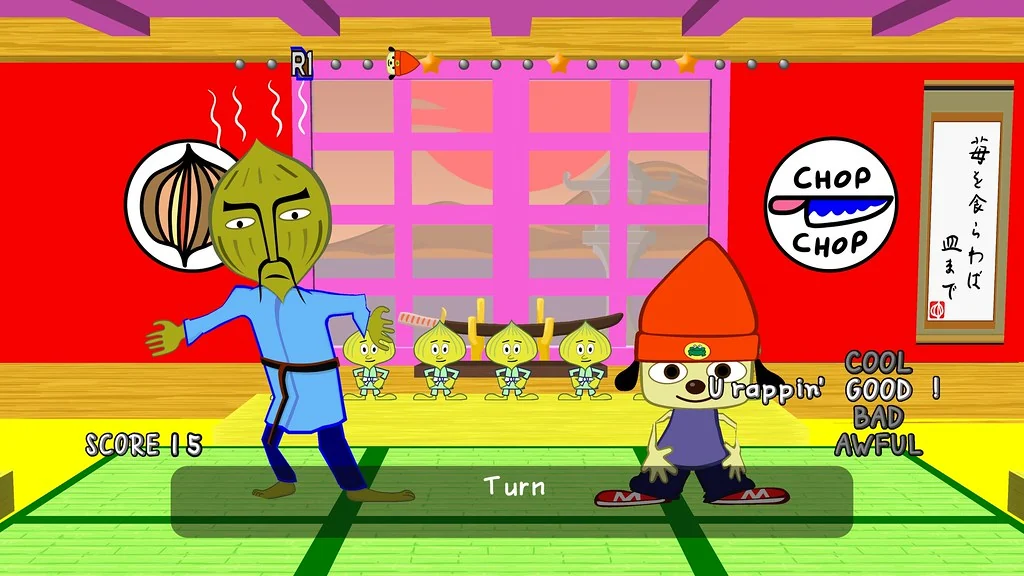 PaRappa the Rapper Remastered · Official promotional screenshot
PlayStation · 일본 원작
PaRappa the Rapper turns a teacher's rap into a button-based call and response. Players listen, then perform the pattern on their turn. Released for PlayStation in Japan in 1996, the game builds each lesson around a character situation that gives the inputs both an order and a purpose.
Listen to a demonstration and respond with button patterns
1997
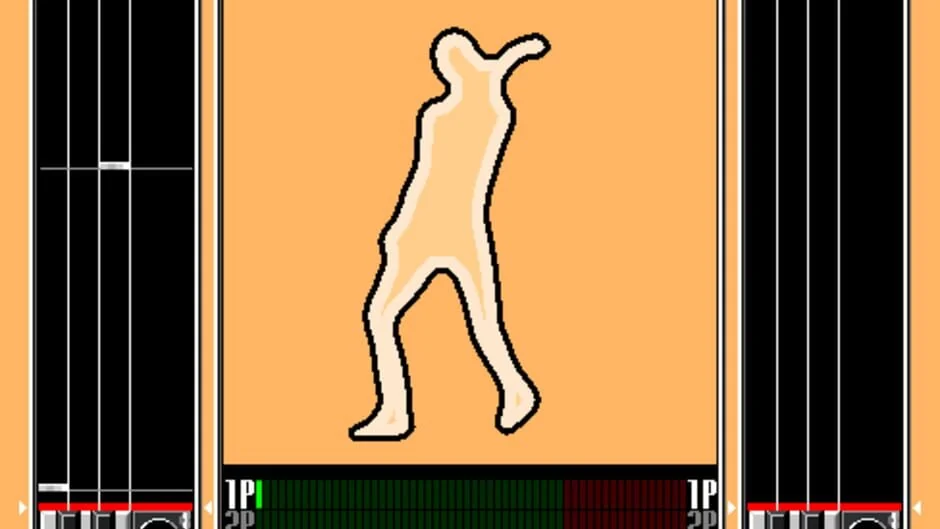 beatmania · Archived arcade screenshot
아케이드 · KONAMI 연혁 기준
beatmania arrived in arcades in 1997 with five keys and a turntable. Players follow music-timed objects down lanes that map to the controls, switching between key presses and scratching during a song.
Operate keys and scratch in time with the music
1998
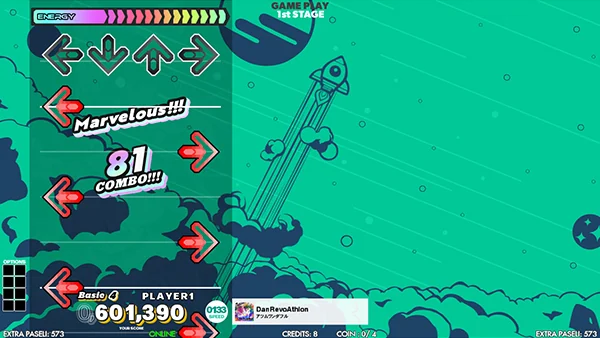 DanceDanceRevolution WORLD · Official gameplay guide
아케이드 · 일본 시리즈 시작 연도
DanceDanceRevolution asks players to step on panels matching directional cues. Each step moves body weight as well as a foot, so preparing the next input involves balance and posture alongside timing.
Read directions and step on panels
1998
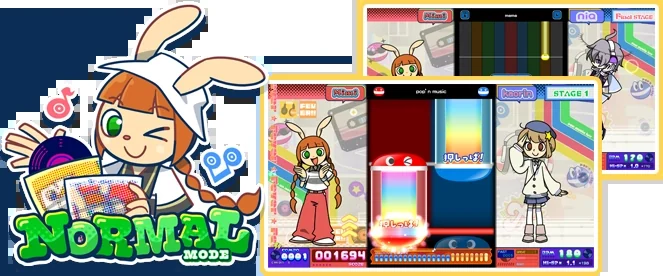 pop'n music High☆Cheers!! · NORMAL mode guide
아케이드 · KONAMI 연혁 기준
pop'n music brings nine round buttons, songs and characters into an arcade rhythm game. A song's presentation helps shape the choice before play; its patterns give the hands a layout to learn once the performance starts.
Correspondence among nine buttons, characters and music
1999
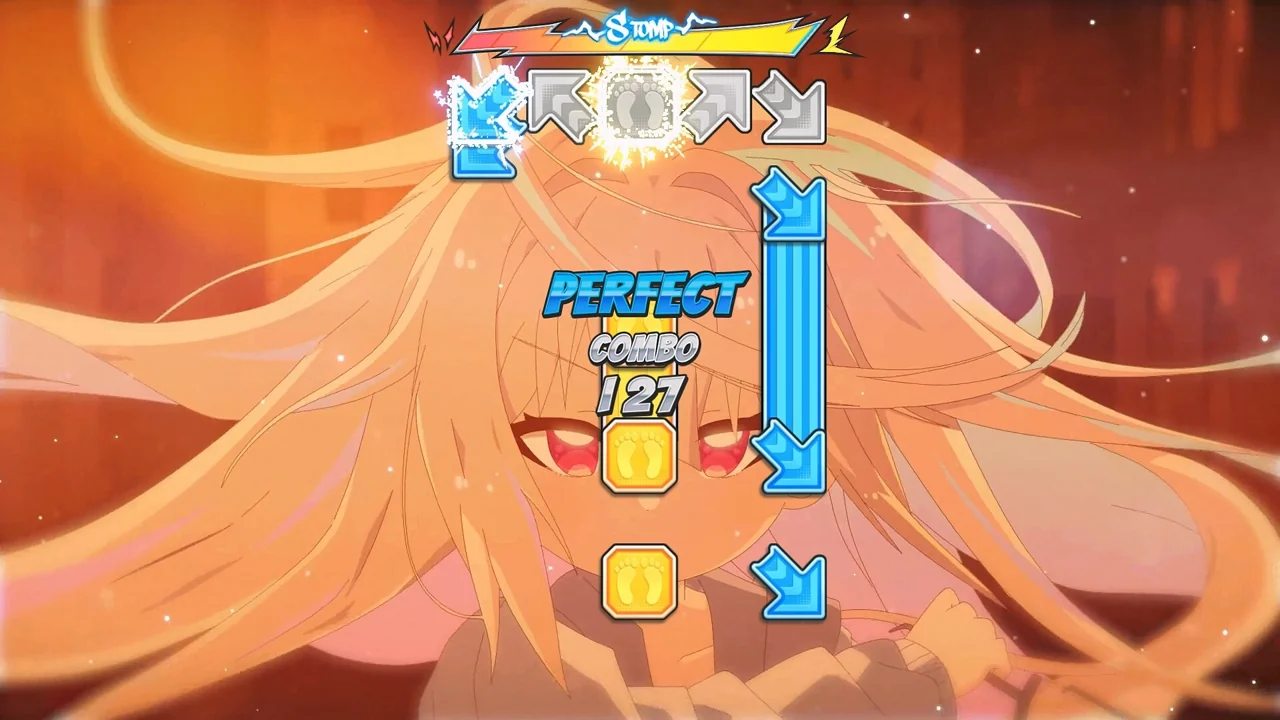 PUMP IT UP RISE · Official PC promotional screenshot
한국 Andamiro · 아케이드
Pump It Up's five panels place a center between four diagonals. With the same number of notes, a different route across those positions changes how the player prepares each step.
Steps and body movement across five panels
1999
 beatmania IIDX · Official original-product screenshot
아케이드 · KONAMI 연혁 기준
KONAMI's chronology records beatmania IIDX, GUITARFREAKS and drummania in 1999. Within music games, keys and scratching, guitars and drum-shaped controllers began demanding different actions.
Seven keys and scratching, plus branching guitar and drum controls
2001–2004 · 감각과 음악의 확장
북 타격, 조준과 시청각 반응, 온라인 음악게임으로 조작과 제공 방식이 확장됐다.
2001
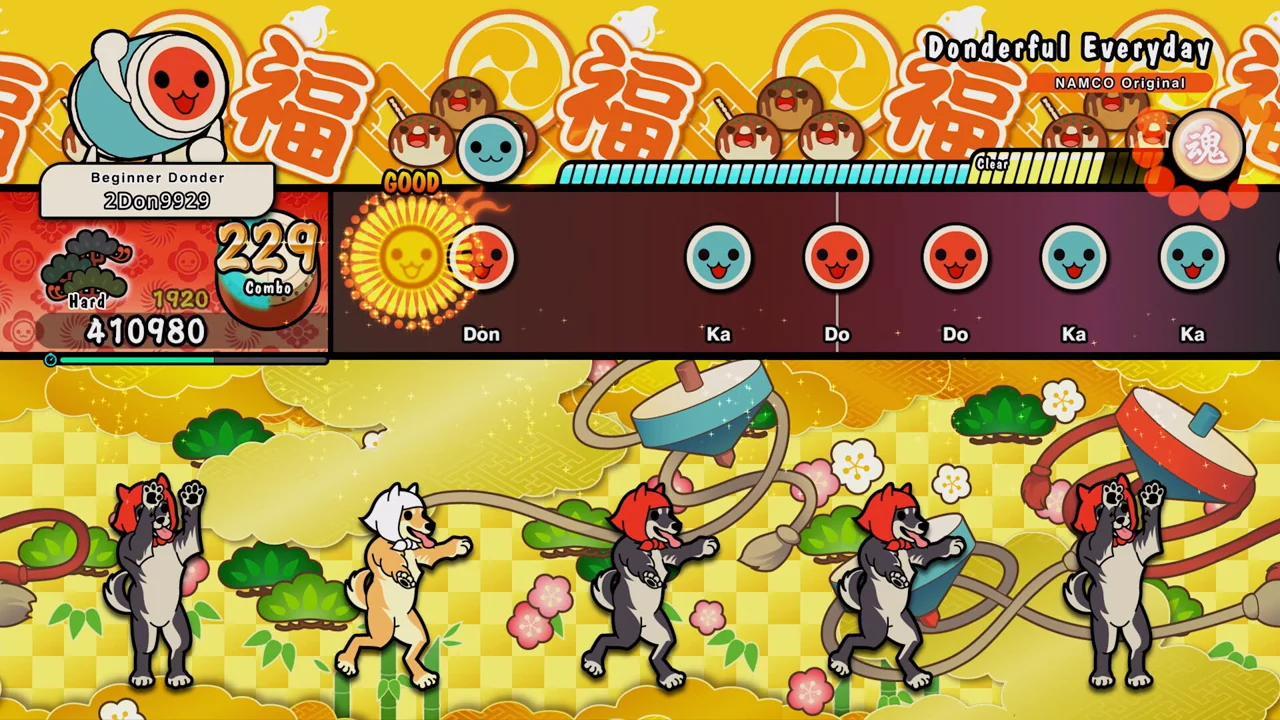 Taiko no Tatsujin: Rhythm Festival · Official PC screenshot
일본 아케이드 · 2001년 시작
Taiko no Tatsujin turns strikes on a drum's head and rim into rhythm inputs. The familiar action of drumming maps to signals on screen, while songs and characters give players a setting for repeated performances.
Drumming actions and rhythm signals
2001
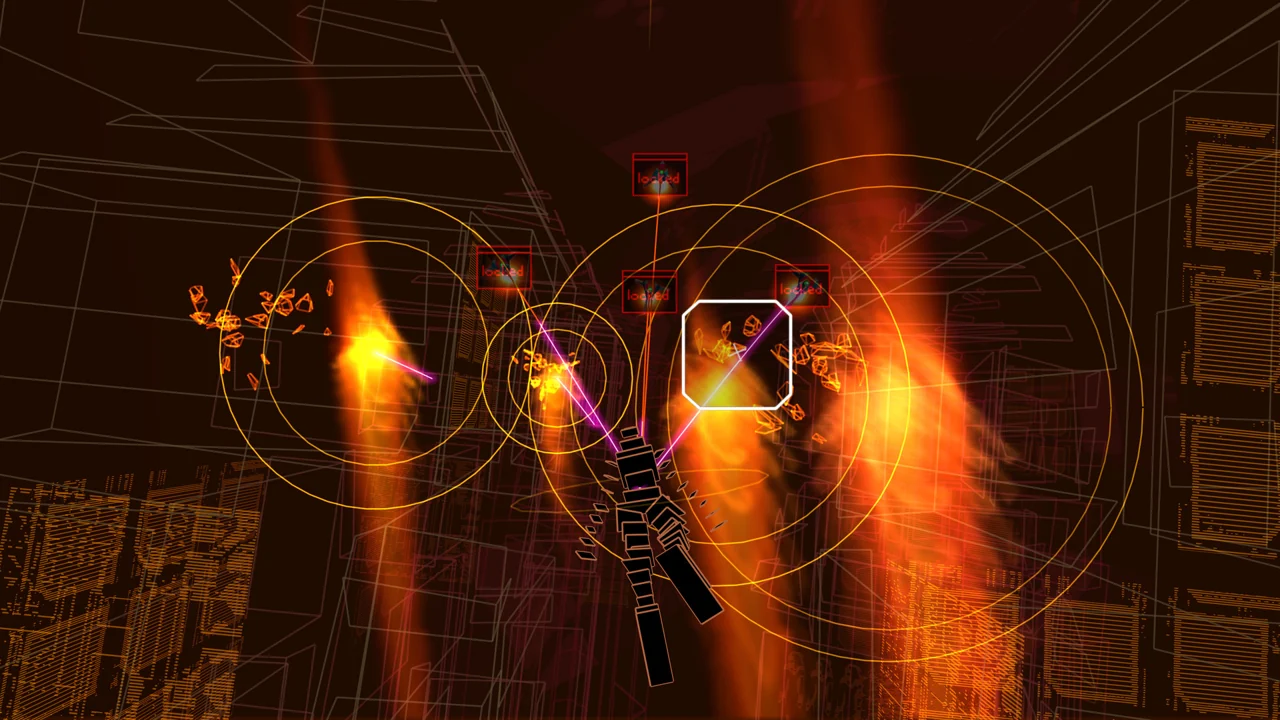 Rez Infinite · Official PC screenshot
2001년 원작 · 후대 Infinite와 구분
Rez makes the results of aiming and attacking part of its music, visuals and vibration. Each action contributes to the audiovisual rhythm, offering a different structure from following a fixed note chart.
Combining controls, music, visuals and vibration
2004
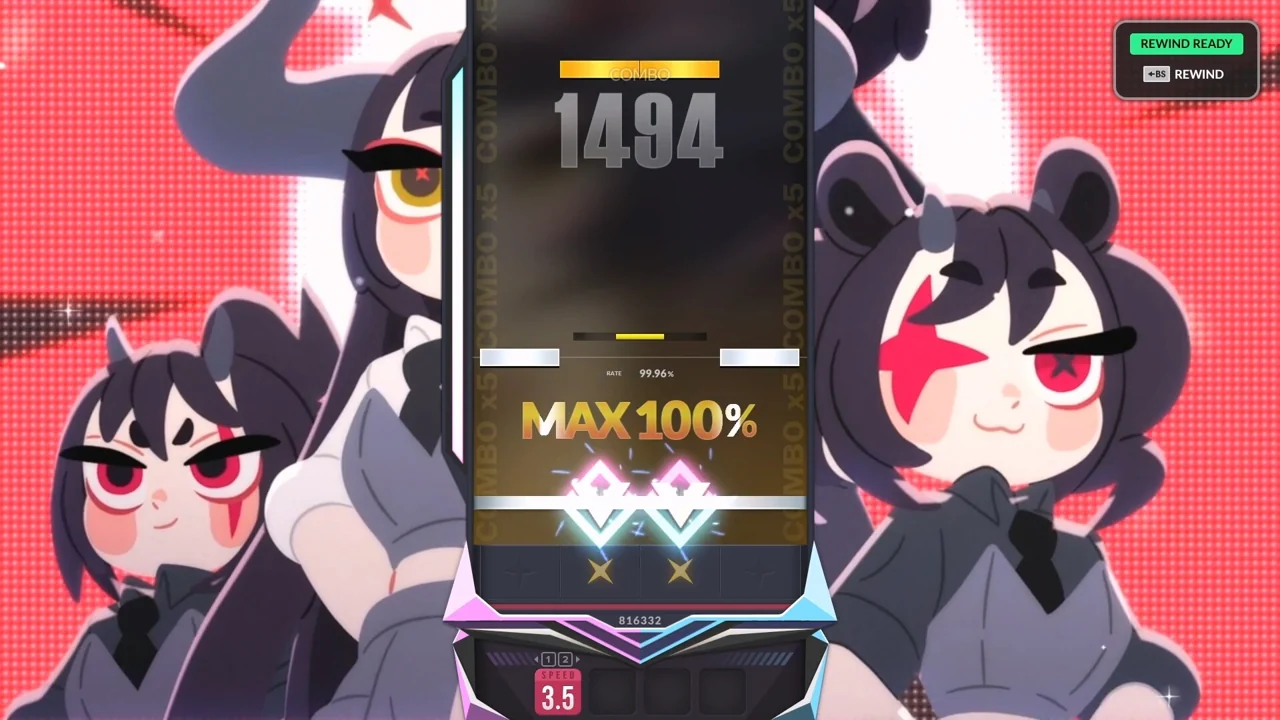 DJMAX RESPECT V · Official PC screenshot
2004년 온라인 서비스 기원 · 후속 계열은 구분
DJMAX's official 20th-anniversary material traces the series to DJMAX Online's service launch in June 2004. The later RESPECT V gives players separate choices of song, button configuration and difficulty, each shaping the performance differently.
Chart performance and selectable button configurations
2005–2009 · 가정과 손안, 만드는 사람들
악기형 컨트롤러의 공연과 합주, 휴대용 터치 조작, 이용자 채보 제작이 함께 전개됐다.
2005
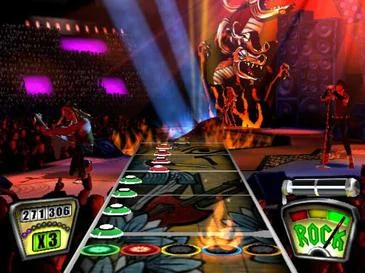 Guitar Hero · 2005 game screenshot
가정용 · Harmonix 회고 기준
Guitar Hero pairs held fret buttons with a strum bar played to the beat. One hand chooses the frets while the other strums, turning the input sequence into a guitarist's performance on stage.
Participate in music with a guitar-shaped controller
2006
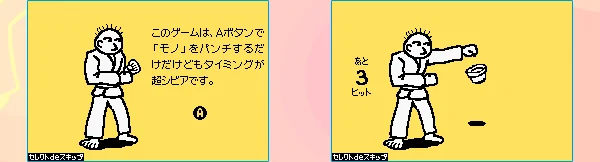 Rhythm Tengoku · Official Game Boy Advance guide
Game Boy Advance · 일본
Rhythm Tengoku builds short scenarios around sounds and movements that prepare the next action. Watching and listening teaches the interval before a press, giving players a way to anticipate the beat.
Anticipate timing through musical and action cues
2006
 Elite Beat Agents · Official European Nintendo DS screenshot
Nintendo DS · 북미판
Elite Beat Agents turns the DS touch screen into a space for taps, traced paths and spins. The lower screen combines position with timing; the upper screen shows the situation those actions affect. Both contribute to the same sequence of play.
Tap, slide and spin
2007
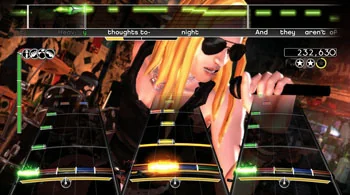 Rock Band · 2007 game screenshot
가정용 · Harmonix 회고 기준
Rock Band puts guitar, drums, vocals and other parts into a shared performance. Each player follows a different task and set of cues while the song advances for everyone, giving ensemble play a structure distinct from solo performance.
Share several performance roles within one song
2007
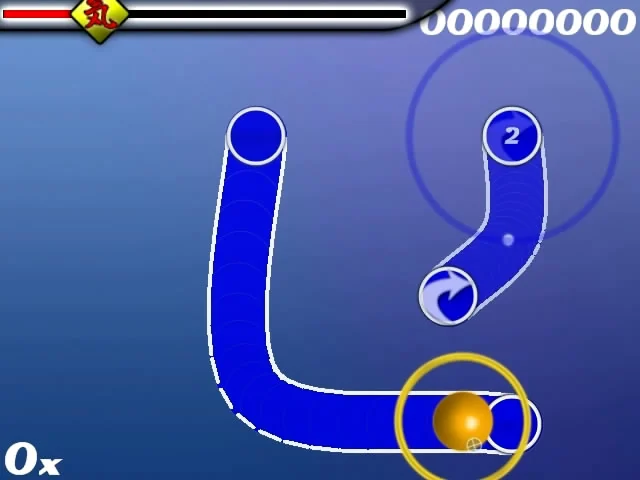 osu! · Early 2007 screenshot preserved in the official wiki
PC · 시험·공개·공동체 형성의 여러 단계
osu!'s 2007 records place gameplay alongside an editor. The route into choosing and playing a song connects to creating and testing charts, making production and sharing part of its content structure.
Position, timing, chart creation and sharing
2008
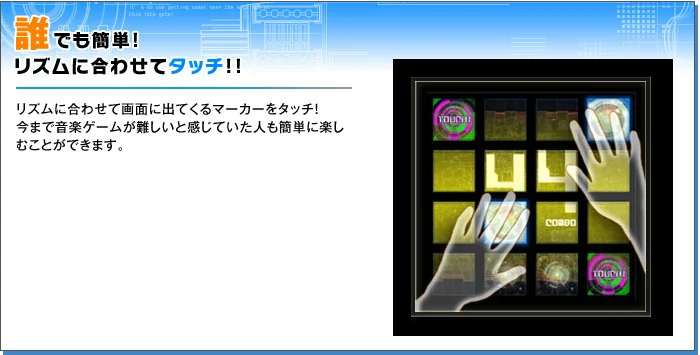 jubeat · Official original-product control guide
아케이드 · KONAMI 연혁 기준
jubeat places timing signals on sixteen panels in a 4×4 grid. Players press where a signal appears, bringing display and control together. Reading across the grid and preparing the next hand position remain central to the challenge.
Read visual signals and touch their positions across sixteen panels
2009
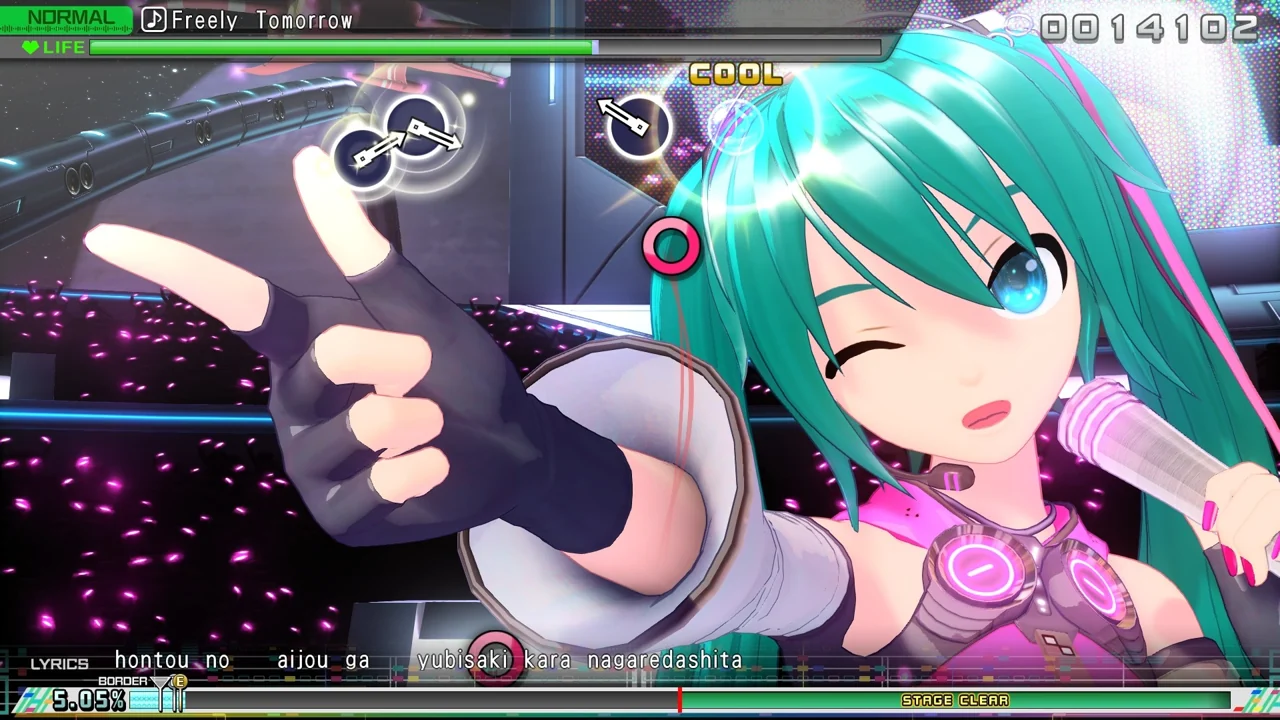 Hatsune Miku: Project DIVA Mega Mix+ · Official PC screenshot
PSP 원작 · 일본
Project DIVA puts music-timed inputs over character performances. Returning to a favorite song or performance provides one reason to play; following the rhythm cues supplies the task within it.
Music-timed input and character performance
2012–2018 · 터치에서 장르 결합과 VR로
모바일 스캔라인과 노브 조작, 던전의 박자 전투, VR 공간의 방향 입력이 등장했다.
2012
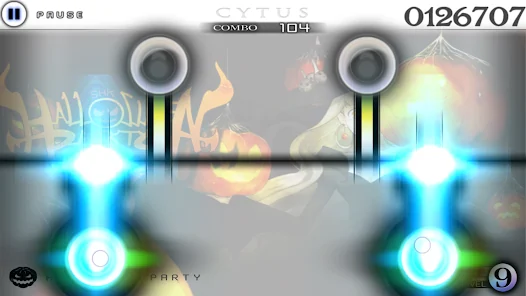 Cytus · Rayark's official Android promotional screenshot
모바일 · 2012년 1월
In Cytus, a moving horizontal scan line tells players when to touch notes across the screen. Following its progress and locating the next note become parts of the same timing task.
Combining a moving scan line with note positions
2012
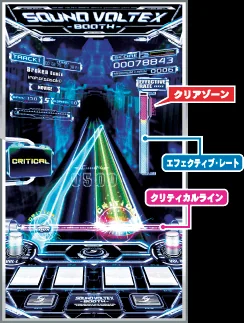 SOUND VOLTEX BOOTH · Official screen guide
아케이드 · KONAMI 연혁 기준
SOUND VOLTEX BOOTH adds rotary knobs to button presses. Following lines with those knobs creates continuous movement alongside notes struck at a particular instant.
Buttons, rotary controls and changes in sound
2015
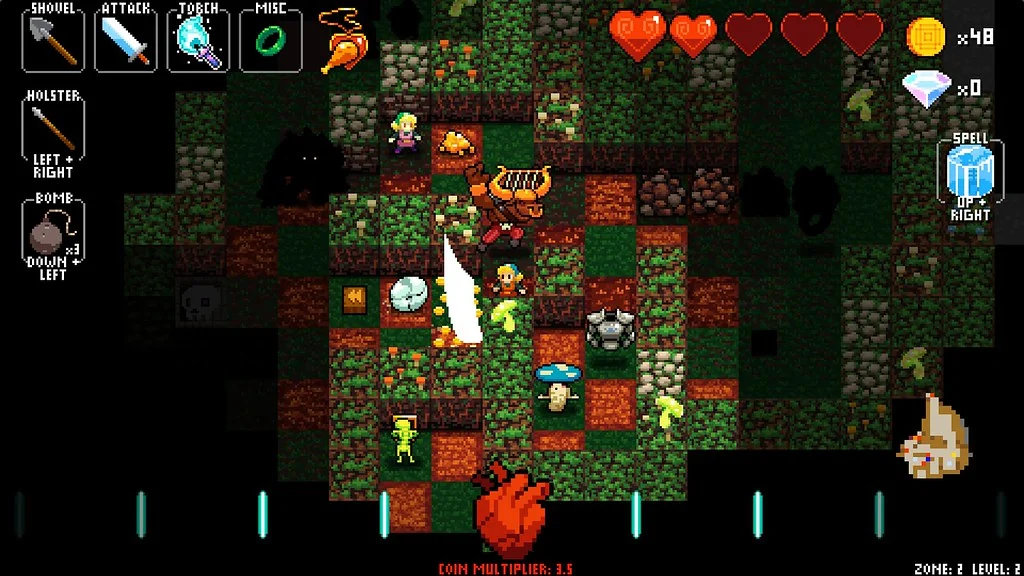 Crypt of the NecroDancer · Developer's 2015 announcement screenshot
PC판 · 2015년 개발사 소개 기준
Crypt of the NecroDancer asks players to keep the beat while choosing their next tile and combat action. Identical input times can produce different outcomes because direction is also a decision.
Beat-timed movement and combat with dungeon decisions
2018
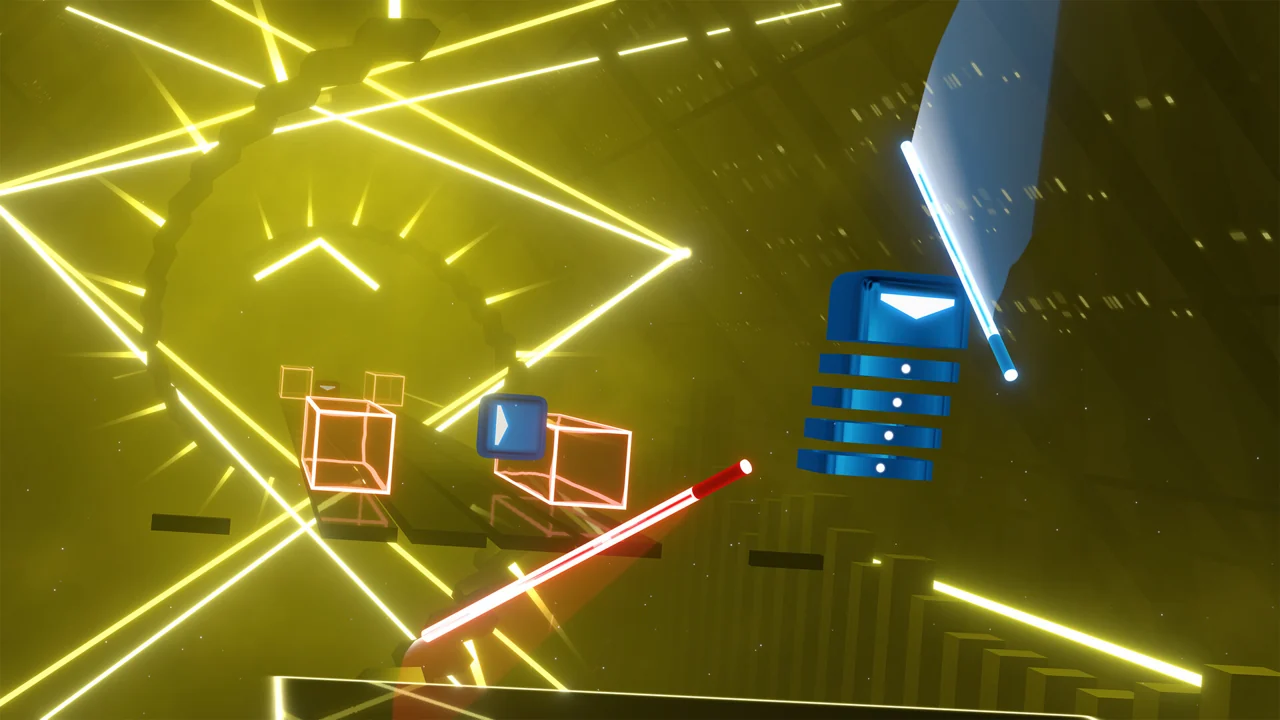 Beat Saber · Official PC promotional screenshot
PS VR판 · 2018년 11월 20일
Beat Saber asks players to cut VR blocks in the indicated direction. Reading the cue is part of the task; moving an arm far enough and preparing its next swing are part of it too.
Move the arms through VR space in response to musical cues
작품별 시점과 조작 방식
같은 해에 등장한 작품도 입력 장치와 동작은 다르다. 아래 표는 각 글에서 다룬 시점과 플랫폼, 기본 조작을 대조한 자료다.
출처를 포함한 연표 CSV 받기