Rhythm design / Rhythm analysis
Same BPM, different difficulty
Two patterns can share 120 BPM and the same note count yet differ in clustering and repeated use of one hand. Define who is playing and what they must do, then examine density, hand movements, memory and cue visibility separately. Records of where players struggle can guide the next change.
Article summary
- Define the interval and event unit used for density first.
- Record direction changes, same-hand repetitions, memory demands and task length together.
- Observe how players apply a rule as it is introduced, repeated, varied and revisited.
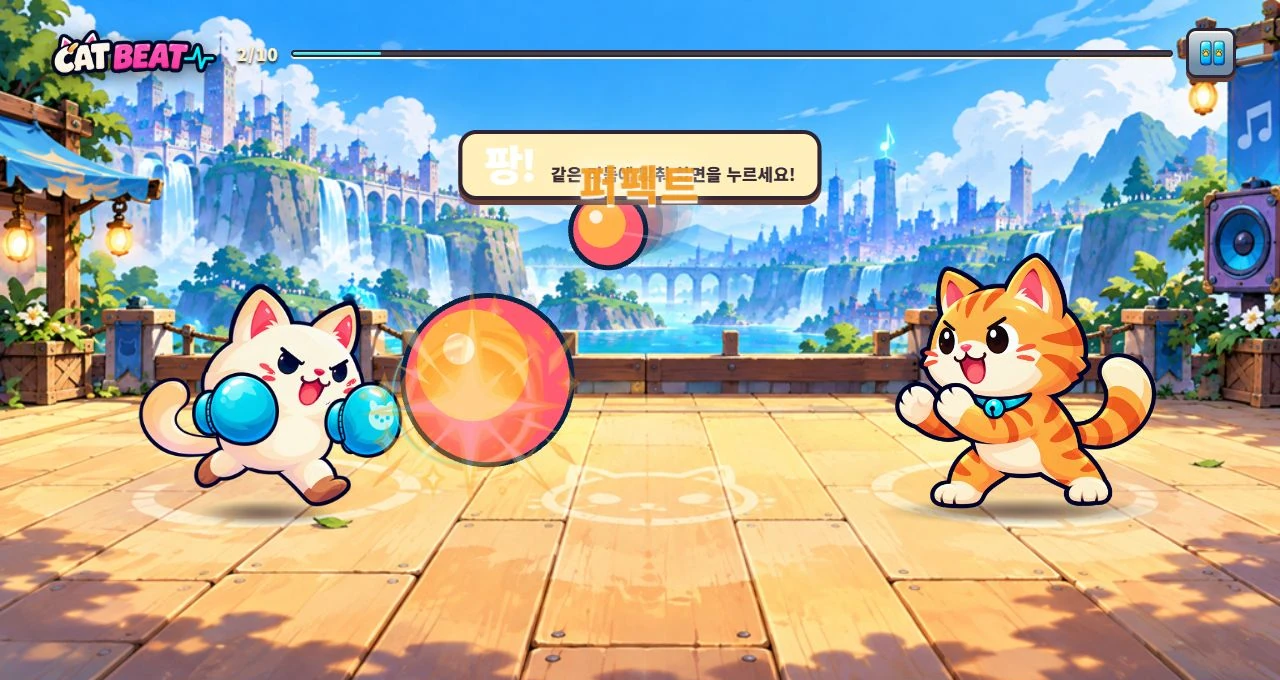
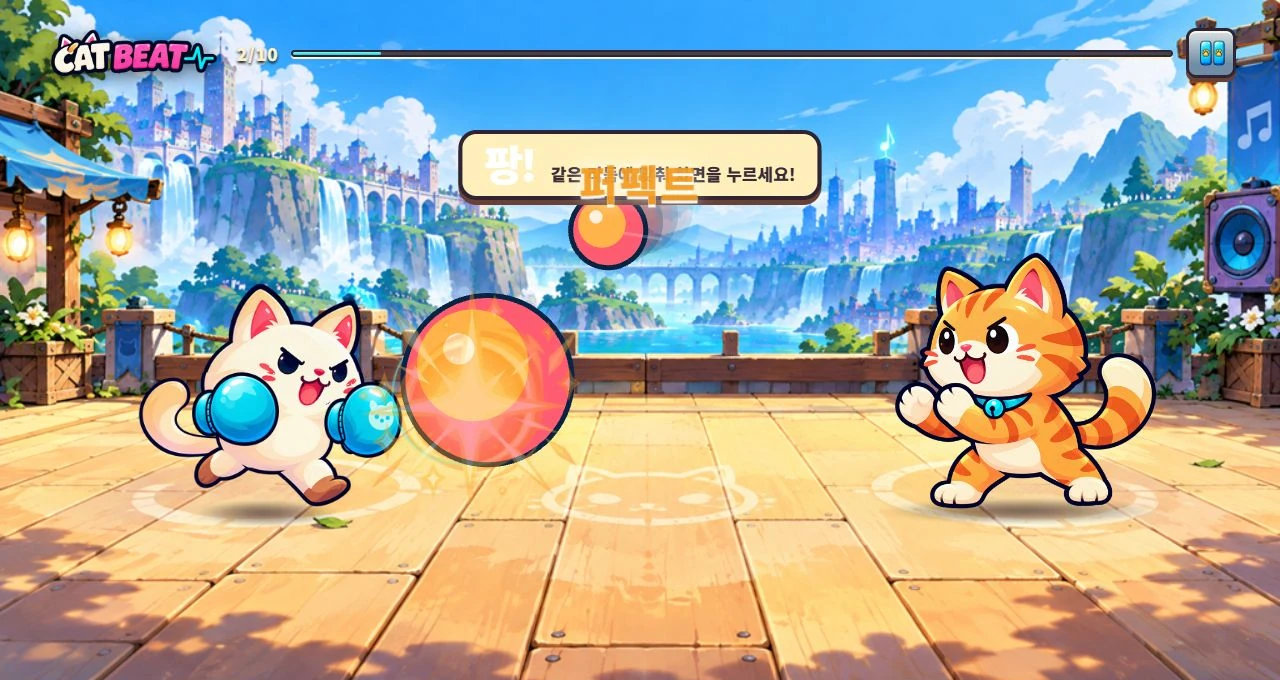
CAT BEAT : Wake the Beat · Development screenshot
Practice mode shows guidance, targets and Perfect feedback. Assess difficulty with the target array and records of both first attempts and repeated play.
Image credit: Level Up Today · Source page ↗ · Original image ↗
Define who is attempting which task for the first time
CAT BEAT's Practice and VS screens present different instructions and cues. To compare difficulty, specify what players must do in each. The exercise below is hypothetical: participants new to two-button left/right controls play a fixed short section.
Record tempo, total inputs, hand actions, cue visibility and timing rules separately. An impression such as “difficult” becomes more useful when it identifies whether the problem lies in noticing a cue, choosing a direction, timing an input or recalling a sequence.
Compare intervals in two arrays with the same average
Two arrays with 16 targets from 0 seconds inclusive to 8 seconds exclusive both average 2 targets/s. A uses 0.5-second intervals, such as 0, 0.5 and 1.0 seconds. B repeats four inputs at 0, 0.125, 0.250 and 0.375 seconds every 2 seconds. B's final input is at 6.375 seconds.
Despite equal totals and observation intervals, minimum spacing differs: 0.5 versus 0.125 seconds. Within a fixed 1-second interval such as [0,1 s), A contains 2 targets and B 4. Use the observation interval as the average's denominator and record clusters and rests separately.
Behavior records leading to the next revision
| Observation | Conditions to record | First item to investigate |
|---|---|---|
| Cue noticed late | Contrast, anticipation and first exposure | Information display |
| Press on the wrong side | Hand placement and direction cue | Mapping meaning to controls |
| Consistently late | Origin, output and input errors | Execution environment and correction |
| Misses during clusters | Minimum spacing and same-hand sequences | Temporal arrangement |
| Sequence confusion | Cue visibility, wait time and error position | Memory task |
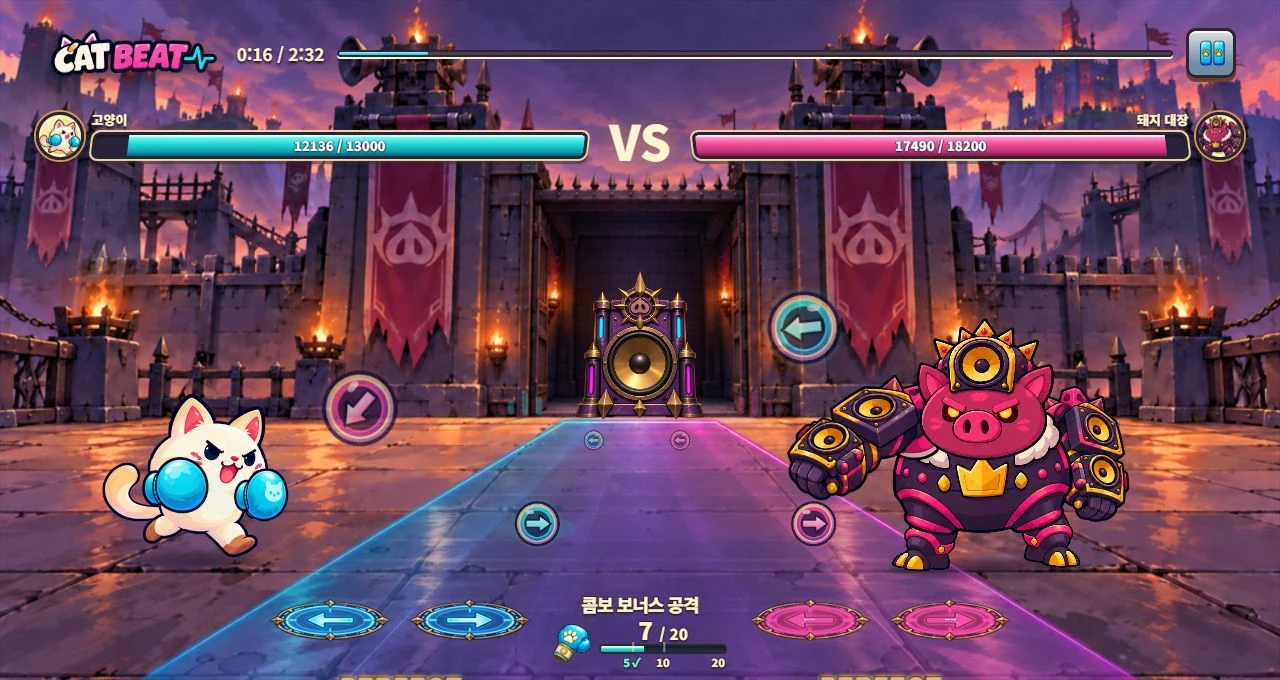
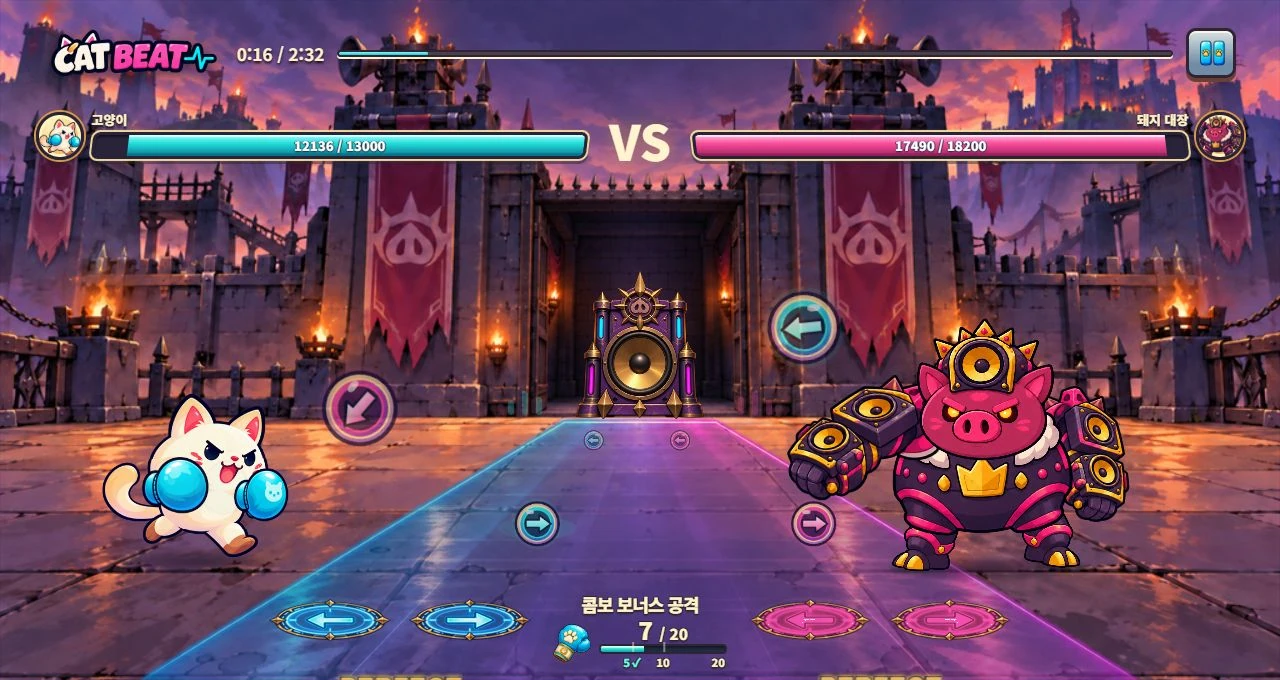
CAT BEAT : Wake the Beat · Development screenshot
Direction cues and both input areas are visible. Demonstration length, response length and when information disappears need evidence from continuous play.
Image credit: Level Up Today · Source page ↗ · Original image ↗
Two ways to place 16 targets within 8 seconds
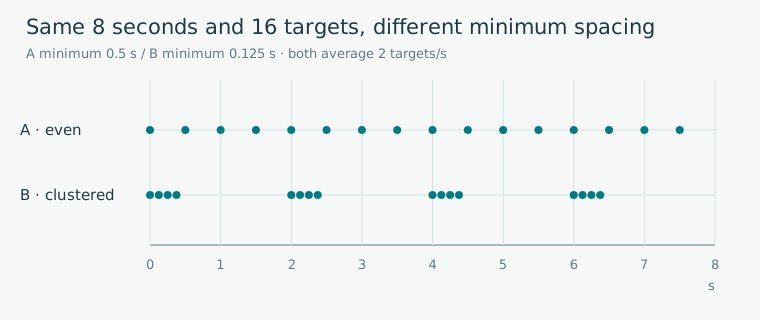
Editorial diagram · Both average 2 targets/s, but minimum spacing and clustering differ.
Horizontal axis: [0,8 s). Rows: evenly spaced A and grouped B. Each dot represents one target.
On smaller screens, scroll the diagram horizontally. Enlarge diagram ↗
Values and sequence shown in the diagram
- A: 16 targets, 0.5 s apart; last at 7.5 s
- B: 4 targets, 0.125 s apart, every 2 s; last at 6.375 s
Record direction changes separately from same-hand repetition
At identical times, LLLL assigns 4 actions to one hand; LRLR assigns 2 to each. Their direction-change counts are 0 and 3, but same-hand repetition demands also differ. Which arrangement is more demanding requires checking device, hand placement, spacing and experience together.
The public osu!mania ranking criteria define key modes and playstyles and discuss repetitions, rests and hold combinations by difficulty. Read these as production guidance for a specific mode, then develop observation categories appropriate to your own controls.
Related primary sources: osu!mania · Ranking criteria ↗
Read direction changes alongside same-hand repetition
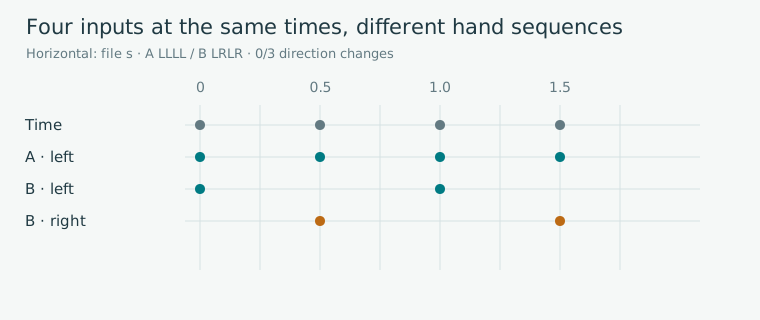
Editorial diagram · A hypothetical comparison assigning the same four targets as LLLL or LRLR. Relative difficulty requires checking the intended device and play.
Horizontal axis: file position (seconds). Rows: all targets, A left hand, B left hand and B right hand. Target order and timing are identical in both arrangements.
On smaller screens, scroll the diagram horizontally. Enlarge diagram ↗
Values and sequence shown in the diagram
- LLLL: 0 changes, 4 consecutive left-hand actions
- LRLR: 3 changes, 2 left-hand and 2 right-hand actions
Record what else changes in a memory comparison
Expanding a demonstration from 2 items to 4 may lengthen both demonstration and response and increase the total number of actions. Record it as a change in task size that also increases the material to remember.
To ask a different question, keep the same four inputs, target times and sounds. In A, leave the sequence visible during the response; in B, hide it after the demonstration. This tests cue availability and retention demands. Record order, practice, fatigue and the positions of wrong inputs alongside the results.
Changed conditions and their linked conditions
| Question | Held fixed | Changed and linked conditions |
|---|---|---|
| Temporal arrangement | Tempo, total count and 8-second interval | Minimum spacing, clustering and rests |
| Direction assignment | Target times and count | Changes and per-hand repetitions |
| Task size | Basic spacing and display rules | Item count and demonstration/response length |
| Cue visibility | Four inputs, timestamps and sounds | Visible or hidden during response |
| Anticipation | Targets, judgment and travel distance | Lead time and screen movement speed |
Introduce a rule, then bring it back
Plan a short sequence: introduce the rule, repeat it consistently, vary one element, allow recovery, then bring it back elsewhere. Begin with steady inputs, for example, before adding rests with musical cues that teach the player to wait.
Distinguish a lucky success from applying the same rule in a later section. osu!'s official Star rating explanation also distinguishes a calculated rating from intended difficulty. Record the actual task and repeated play alongside the number to identify where the design needs adjustment.
Related primary sources: osu! · Star rating ↗
Choose a revision that addresses the observed problem
For missed cues, inspect contrast and advance warning. For reversed directions, inspect the display and hand position. For shifted timing, inspect the music origin, device and note spacing. For sequence errors, record where they occur and when the cue disappeared.
With music and target times fixed, increasing lead time changes screen speed along the same travel distance. State this coupling in the conditions table or test it separately using a stationary marker. Recording both the changed dimension and linked dimensions is the starting point for comparison.
Sources & scope
Sources reviewed 2026.10.17: osu!mania terminology, Patterns and Normal/Hard guidance, plus the definition of Star rating and its distinction from intended difficulty. The 16-target arrays, hand assignments, information-exposure tasks and learning map are hypothetical editorial designs. Automated ratings, screenshot atmosphere and individual performance results remain different forms of evidence.