Rhythm-game history / Historical analysis
Rhythm Tengoku: anticipating input through sound and movement
Rhythm Tengoku builds short scenarios around sounds and movements that prepare the next action. Watching and listening teaches the interval before a press, giving players a way to anticipate the beat.
Article summary
- Ready sounds and character actions anticipate input timing.
- Follow cues in a scene rather than a conventional note lane.
- Sound and preparatory movement cue the next input.
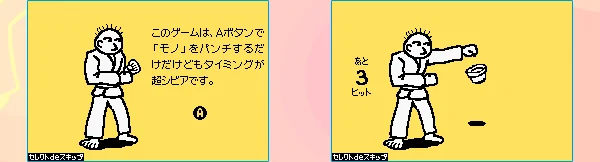
Rhythm Tengoku · Official Game Boy Advance guide
The official guide places Karate Man's instructions beside the game screen. Incoming objects and character movements signal when to act, rather than notes descending along separate lanes.
Image credit: Nintendo / J.P.ROOM · Source page ↗ · Original image ↗
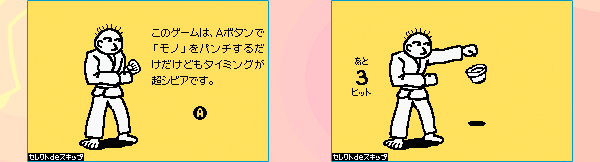
Basic controls
- Watch and listen to the music and incoming objects.
- Press A at the moment to strike.
- Observe whether the character's impact coincides with the musical accent.
Preparation and results in the karate scene
The official guide compares successful and mistimed karate inputs. Their movement differences communicate the result, while ready sounds and gestures help players anticipate the next hit.
The record of the 2006 Japanese GBA release
Nintendo's Iwata Asks records the Japanese GBA release in summer 2006. Developers describe designing rhythm communication through sound and scenarios and their approach to button controls. The retrospective provides evidence of production intent.
Controls and features at a glance
| Element | What the player does | Play characteristic |
|---|---|---|
| Preparatory movement | Communicate the interval before the next action | Establish a reference for anticipation |
| Input | Match the action's moment within the scene | Connect role and rhythm |
| Results | Convey success and failure through movement and expression | Cues for adjustment on the next attempt |
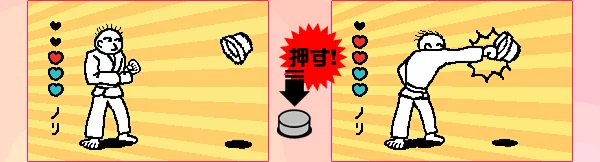
Rhythm Tengoku · Official GBA karate guide
Official images comparing successful and missed karate inputs, showing differences in result animations.
Image credit: Nintendo · Source page ↗ · Original image ↗
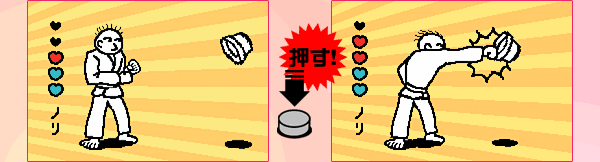
Timing information beyond note lanes
With fewer note-lane markers, sound and preparatory movement take on the work of anticipation. Consistent beats and actions let players predict what comes next. Examine which cues supply that timing information.
An illustrative preparation pattern
In a hypothetical task, two preparatory movements lead into an input on the third beat. The movement intervals and sounds communicate the rule. Removing markers and designing a new anticipation cue are separate steps. Alongside success rates, ask what players saw and heard to understand which cue they used.
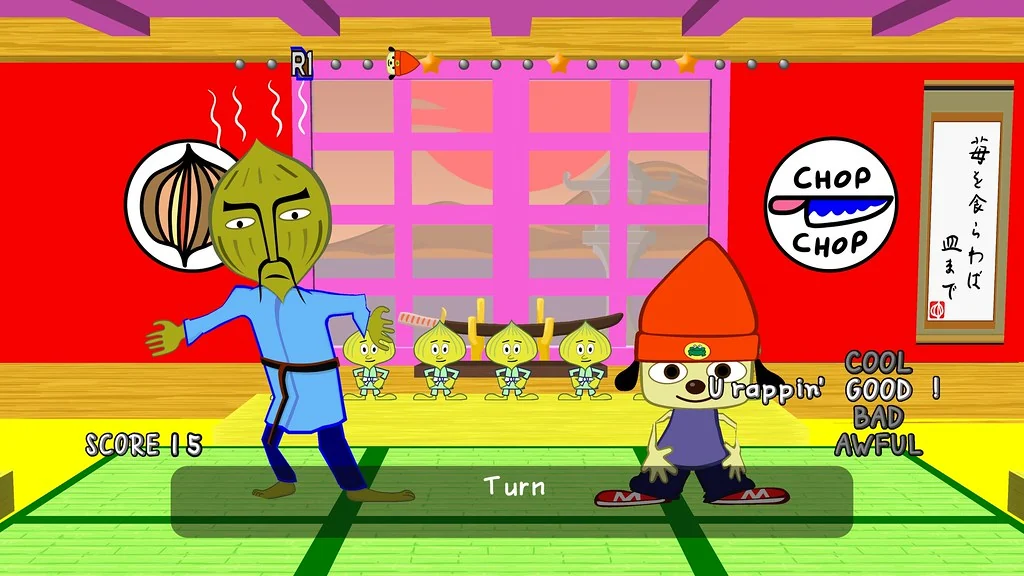
PaRappa the Rapper Remastered · Official promotional screenshot
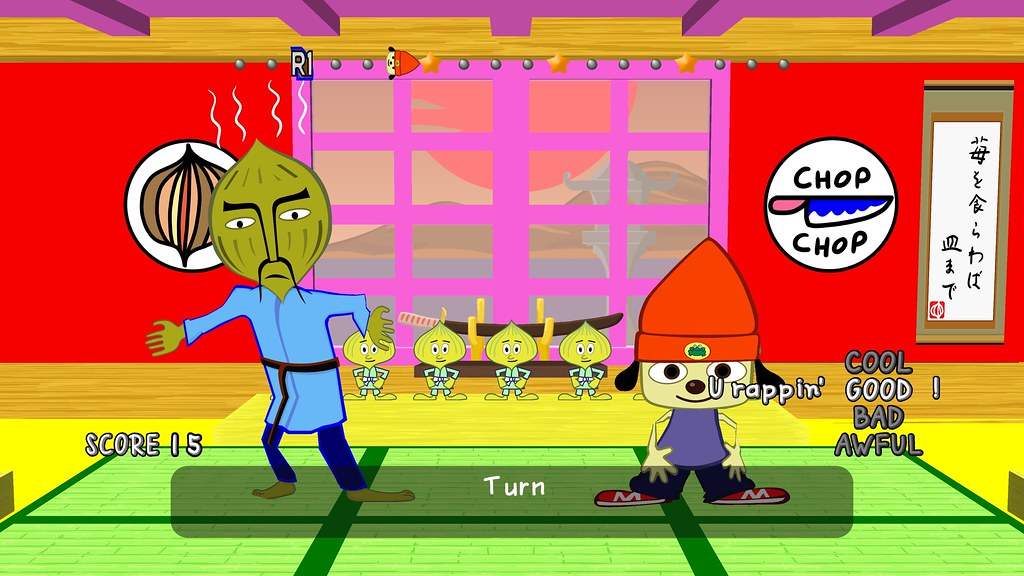
Button cues and character movement guide the teacher's demonstration and the player's response. This screenshot is from the 2017 remaster; the article examines the 1996 original.
Image credit: Sony Interactive Entertainment / PlayStation.Blog · Source page ↗ · Original image ↗
Distinguish prediction from memorization
Anticipating an interval on a first attempt differs from memorizing a sequence after a miss. A result total rarely shows which happened. PaRappa's demonstrations and responses offer a comparison of how cues connect listening to acting.
Sources & scope
Developer retrospectives and official guidance inform the account of the 2006 GBA game's design direction. Later DS and Wii materials should be read in relation to their respective hardware and controls.