Rhythm-game history / Historical analysis
PaRappa the Rapper: call and response as a game
PaRappa the Rapper turns a teacher's rap into a button-based call and response. Players listen, then perform the pattern on their turn. Released for PlayStation in Japan in 1996, the game builds each lesson around a character situation that gives the inputs both an order and a purpose.
Article summary
- Demonstration and response intervals alternate.
- Button icons indicate the action; music supplies its timing.
- The character's situation gives repeated inputs a purpose.
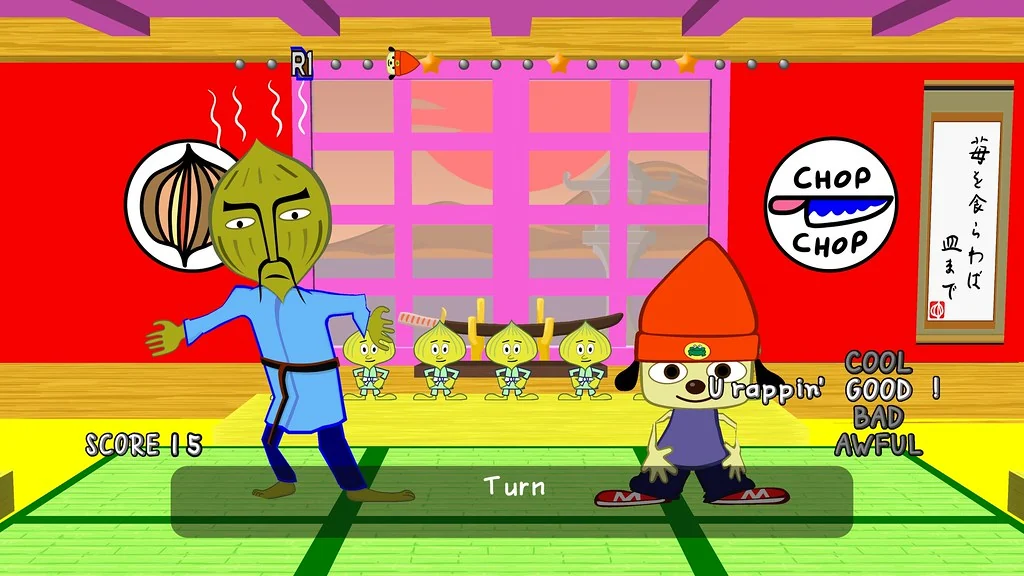
PaRappa the Rapper Remastered · Official promotional screenshot
Button cues and character movement guide the teacher's demonstration and the player's response. This screenshot is from the 2017 remaster; the article examines the 1996 original.
Image credit: Sony Interactive Entertainment / PlayStation.Blog · Source page ↗ · Original image ↗
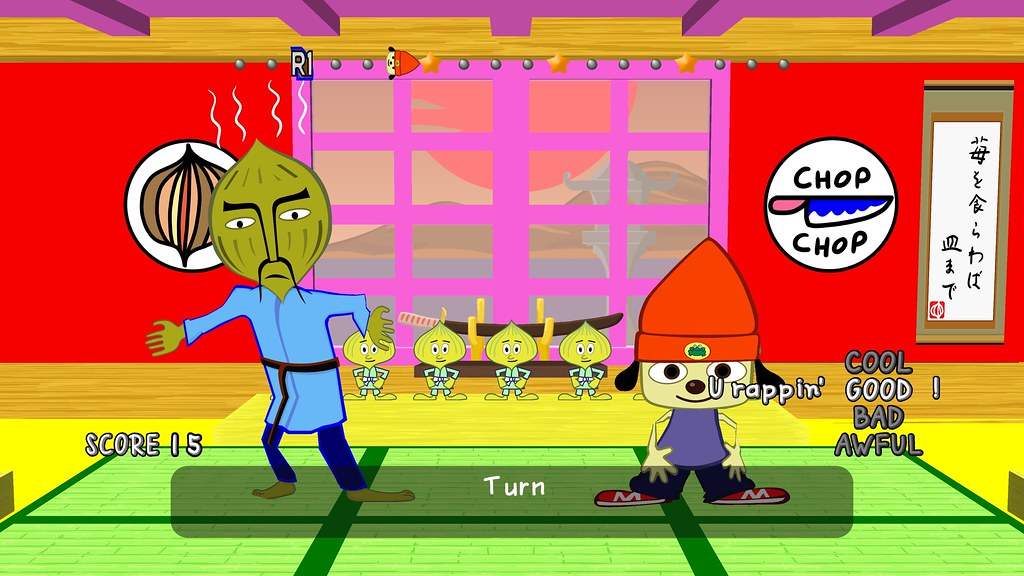
Basic controls
- Learn the rap and button order during the demonstration.
- Press the indicated buttons to the beat on your turn.
- Read character reactions and the on-screen evaluation for the result.
Listen to the demonstration, then respond
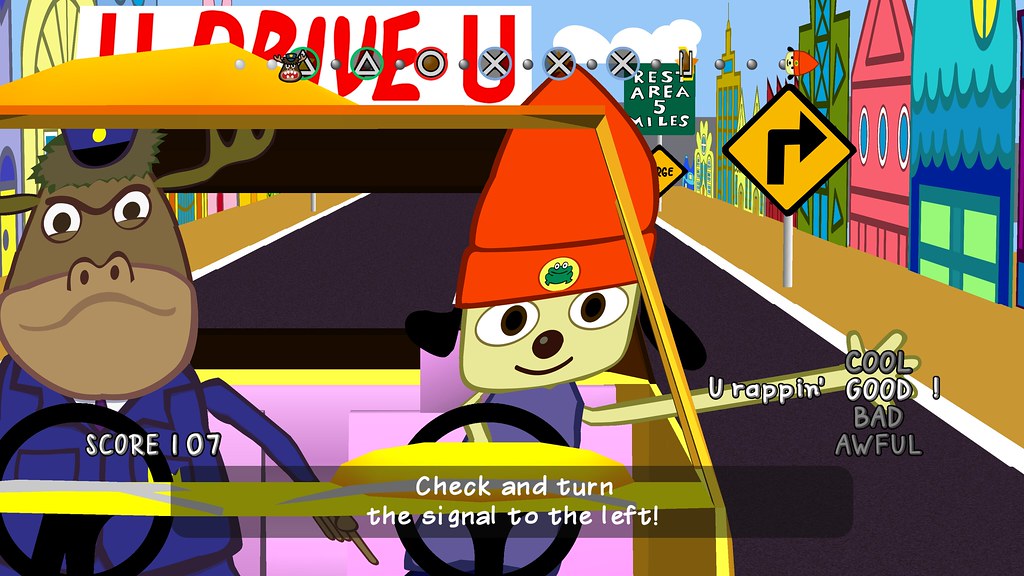
The teacher delivers a phrase; the player responds by pressing buttons to its rhythm. In the remaster, button order appears above the scene and lyrics below it. A clothing shop and a driving lesson provide different settings for the same alternating demonstration-and-response rule.
The original Japanese release in 1996
PlayStation's creator interview records the Japanese original's release as December 6, 1996. Hardcore Gaming 101's analysis also describes responding with button patterns after a teacher's rap. Sources distinguish the original's date from later ports.
Controls and features at a glance
| Element | What the player does | Play characteristic |
|---|---|---|
| Demonstration | Read the teacher's rap and button sequence | Listening time serves as preparation |
| Response | Enter the same rhythm on the player's turn | Turn a remembered rhythm into action |
| Story | Different teachers and situations in each scene | A reason to see the next lesson |
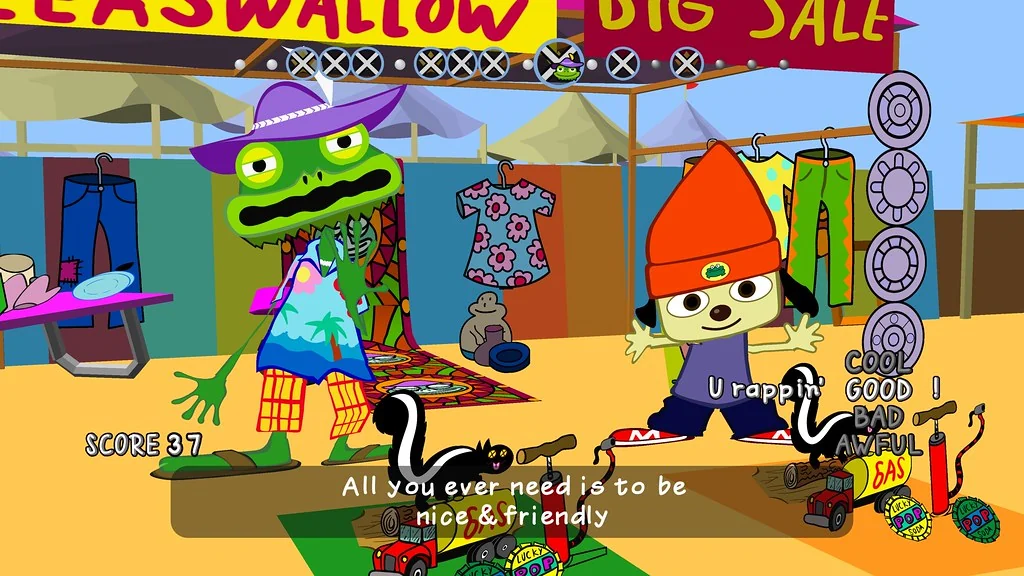
PaRappa the Rapper Remastered · Official PlayStation screenshot
Actual gameplay in the clothing-shop lesson. Button order appears above and rap lyrics below.
Image credit: Sony Interactive Entertainment · Source page ↗ · Original image ↗
Teach the controls through the scene
Each input becomes part of the character's lesson. Listening prepares the player; their turn is the time to respond. The scene communicates both the story's purpose and the controls needed to continue it.
Make the change of turn clear
Consider a hypothetical pattern with one bar of demonstration and one of response. A cue marks the change of turn. If players keep pressing during the demonstration, examine that cue alongside the instructions. The rule needs to make the listening and playing turns clear.
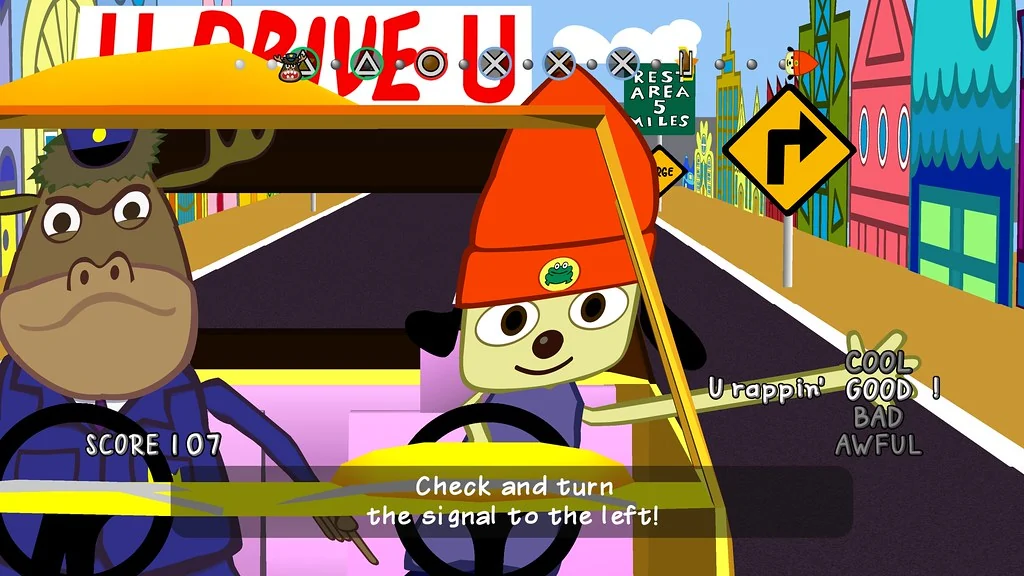
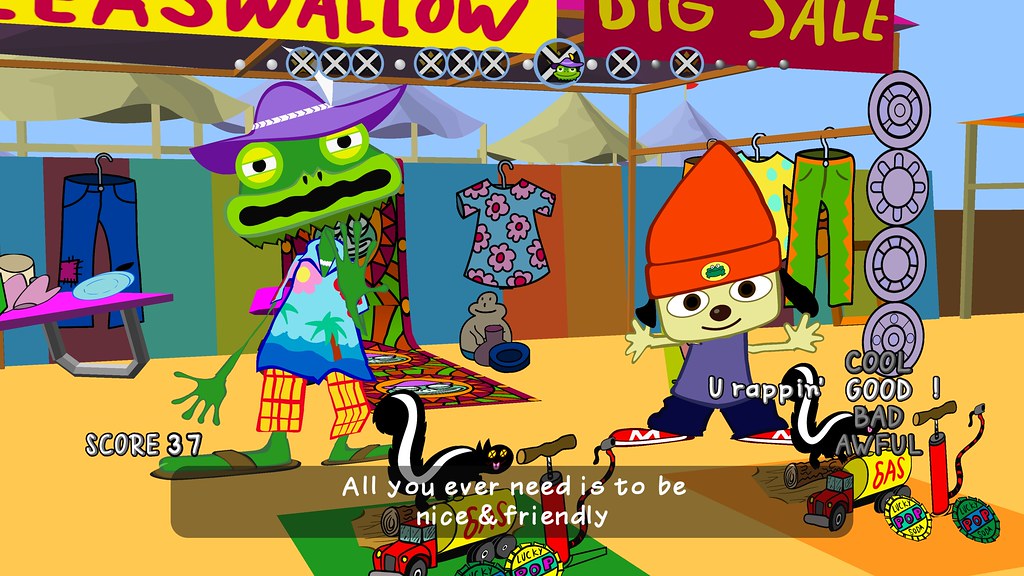
PaRappa the Rapper Remastered · Official PlayStation screenshot
The driving lesson. As the situation and characters change, players still respond to the rap following button cues.
Image credit: Sony Interactive Entertainment · Source page ↗ · Original image ↗
Input completes the character's action
Continuing a character's rap gives an input a different meaning from simply adding points. In PaRappa, the story supplies a reason for the next response. Call and response connects listening to the music with taking part in it.
Sources & scope
The PlayStation interview was compared with specialist coverage. The article explains the original's production context using screenshots from the 2017 remaster.