Rhythm-game history / Historical analysis
beatmania: five keys and a turntable
beatmania arrived in arcades in 1997 with five keys and a turntable. Players follow music-timed objects down lanes that map to the controls, switching between key presses and scratching during a song.
Article summary
- Key input and scratching serve different roles.
- Map screen lanes to physical controls.
- Musical tempo and chart density are separate design decisions.
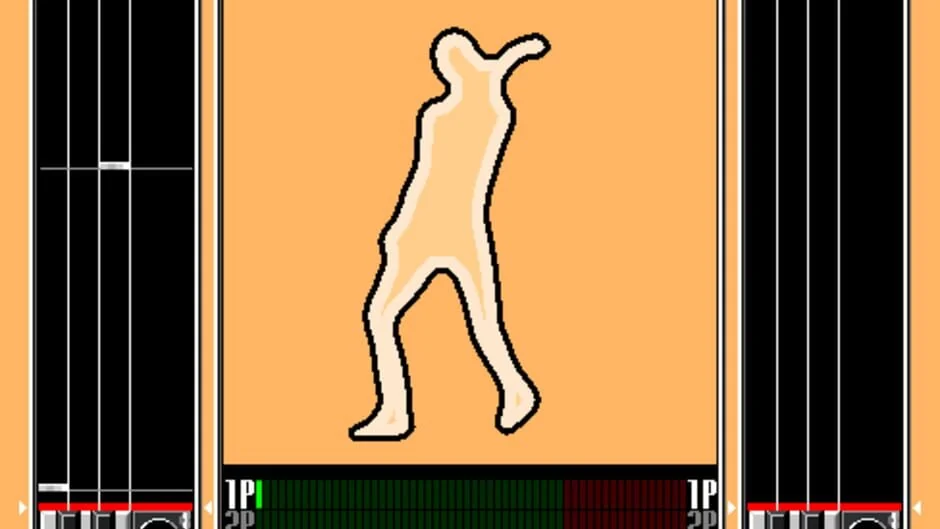
beatmania · Archived arcade screenshot
Vertical lanes identify input positions around the central music visuals. Players press keys or scratch as objects reach the line below. This control-guide screen comes from the official material page.
Image credit: KONAMI · Image archive: Retrorama · Source page ↗ · Original image ↗

Basic controls
- Read the lanes of descending objects.
- Operate the corresponding key or turntable when an object reaches the lower judgment position.
- The central visuals and input lanes have different roles.
Mapping the screen to the control panel
Five staggered keys sit in two rows beside a turntable. Players read each lane and operate the corresponding control. Keys and scratching give their hands different jobs within the same song.
The 1997 release and later branches
KONAMI's product history records beatmania in 1997. The original IIDX product document compares the existing five keys with seven and explains operating music through keys and scratching. These sources establish the starting date and relationship to the later branch.
Controls and features at a glance
| Element | What the player does | Play characteristic |
|---|---|---|
| Keys | Press the button corresponding to the lane | Read position and arrival time together |
| Scratch | Operate the turntable | A different hand movement from a key press |
| Chart | Arrange cues to the music | Give the same song different tasks |
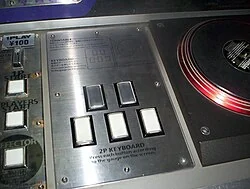
beatmania · Five-key control-panel photo
Five staggered keys in two rows and a turntable, showing the spatial relationship between two different controls.
Image credit: photograph provided through Wikimedia Commons · See the individual file's rights statement · Source page ↗ · Original image ↗

Musical tempo and hand movements
A song can support charts with different note positions and densities. Even at a fixed tempo, the chart changes how each hand moves. Consistent lane-to-control mapping gives players a layout they can learn through repetition.
Input arrangements over the same four beats
Four evenly spaced inputs on one hand make a different task from four alternating between left and right. Changing only their positions helps compare the demands of switching hands. Describe the controller's instrument-like appearance separately from the rules that score its inputs.
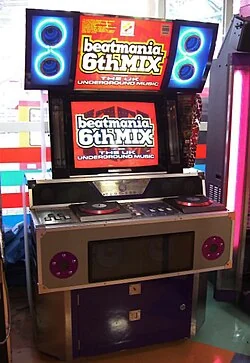
beatmania 6thMIX · Later arcade-cabinet photo
A later 6thMIX cabinet with screen, keys and turntable. It illustrates the cabinet arrangement of the series that began in 1997.
Image credit: photograph provided through Wikimedia Commons · See the individual file's rights statement · Source page ↗ · Original image ↗

Sound and feedback after a miss
Following a complete recording and triggering sounds with inputs give feedback different roles. A game combining them needs to decide what remains audible after a miss. An account of key-based play therefore needs to explain the sound as well as the moving notes.
Sources & scope
The date follows KONAMI's chronology; the branch comparison uses early IIDX documentation. The 6thMIX photographs and later features are distinguished from the first 1997 cabinet's specifications.