Rhythm-game history / Historical analysis
DDR: four arrows and the movement between them
DanceDanceRevolution asks players to step on panels matching directional cues. Each step moves body weight as well as a foot, so preparing the next input involves balance and posture alongside timing.
Article summary
- Map up, down, left and right cues to the corresponding panels.
- Different step orders change movement even with the same note count.
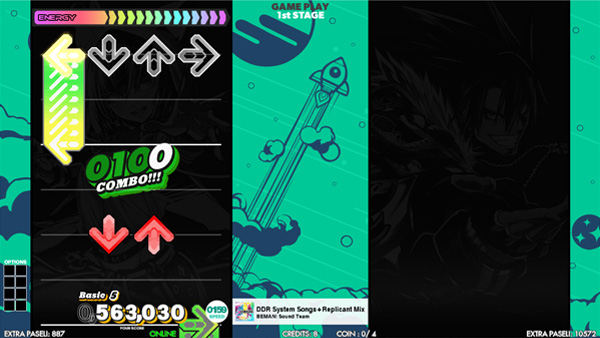
- Freeze arrows in the current version add sustained stepping.
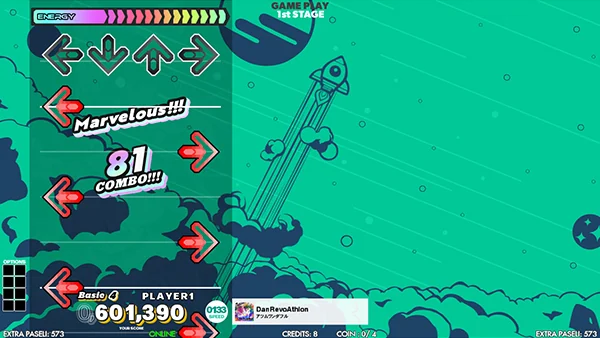
DanceDanceRevolution WORLD · Official gameplay guide
An official guide from the later DDR WORLD. Step on the matching panel when a moving arrow overlaps the fixed arrow at the top.
Image credit: KONAMI / e-amusement · Source page ↗ · Original image ↗
Basic controls
- Read the moving arrow's direction.
- Step on the matching panel when it overlaps the fixed arrow above.
- After moving one foot, prepare your posture for the next panel.
Stepping in four directions
Up, down, left and right signals map to the panel directions. Which foot moves and where the player places their weight affect the next step. The same arrow sequence can require different preparation depending on their starting posture.
The 1998 start in Japanese arcades
KONAMI's product history records DanceDanceRevolution in 1998. This article uses the start of the Japanese arcade series as its reference. Home ports by country and later cabinet features belong to separate dates.
Controls and features at a glance
| Element | What the player does | Play characteristic |
|---|---|---|
| Regular arrow | Step on the panel at the judgment position | Match beat and direction |
| Successive steps | Move a foot to the next panel | Body preparation and weight transfer |
| Freeze arrow | Hold the panel through the long cue | Distinguish initial contact from the hold interval |
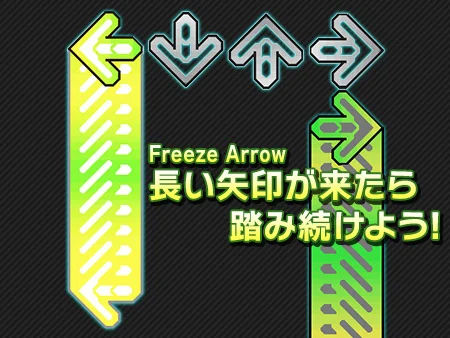
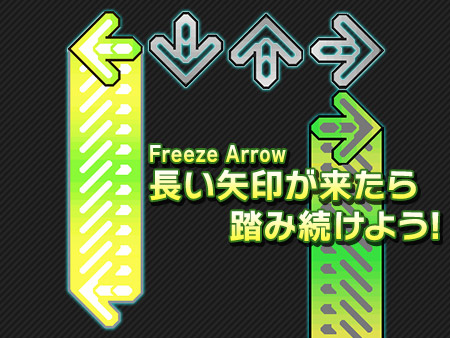
DanceDanceRevolution WORLD · Freeze-arrow guide
An official current-version screen explaining how to keep a panel pressed while a long arrow continues.
Image credit: KONAMI · Source page ↗ · Original image ↗
Panel spacing and body movement
Panel spacing and the routes between panels shape what a dance-pad chart asks of the body. Identical note counts can require different preparation and weight shifts. Read timing intervals alongside movement paths to describe that difference.
Freeze arrows and sustained input
DDR WORLD's current guide shows freeze arrows that require keeping a panel pressed. A successful input has a starting time and a sustained interval. Players must maintain that contact while preparing the next foot movement.
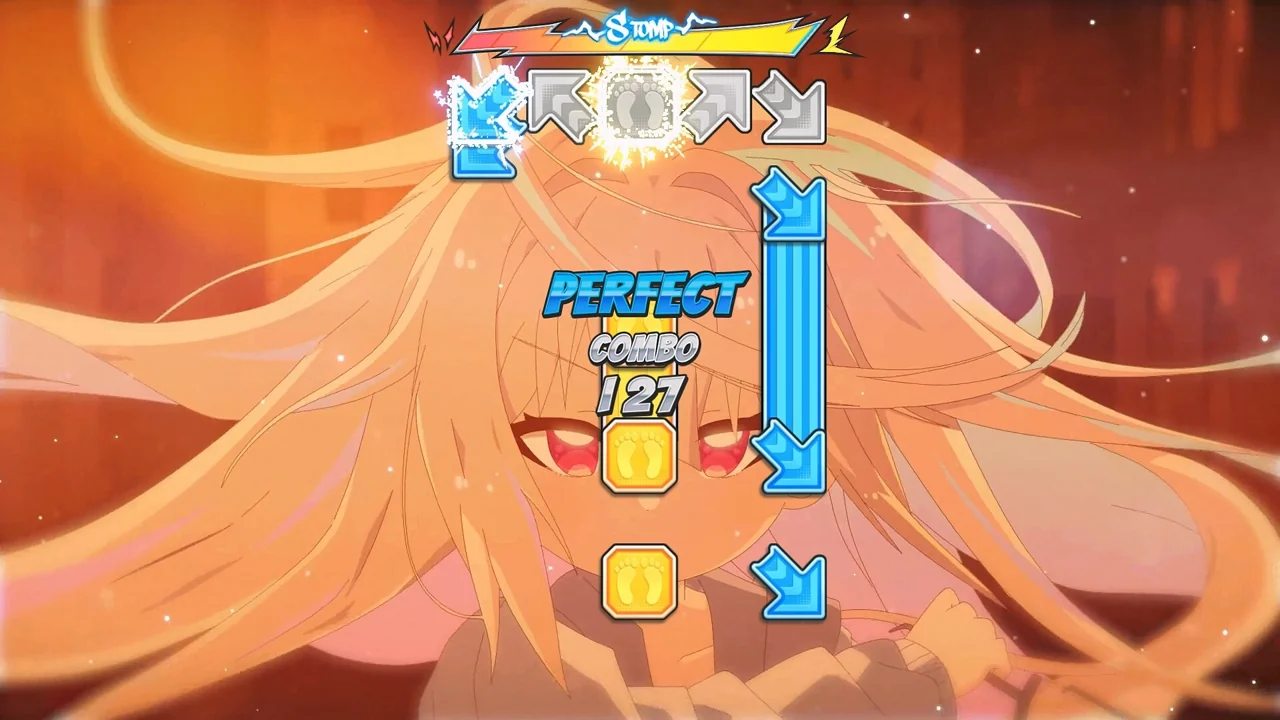
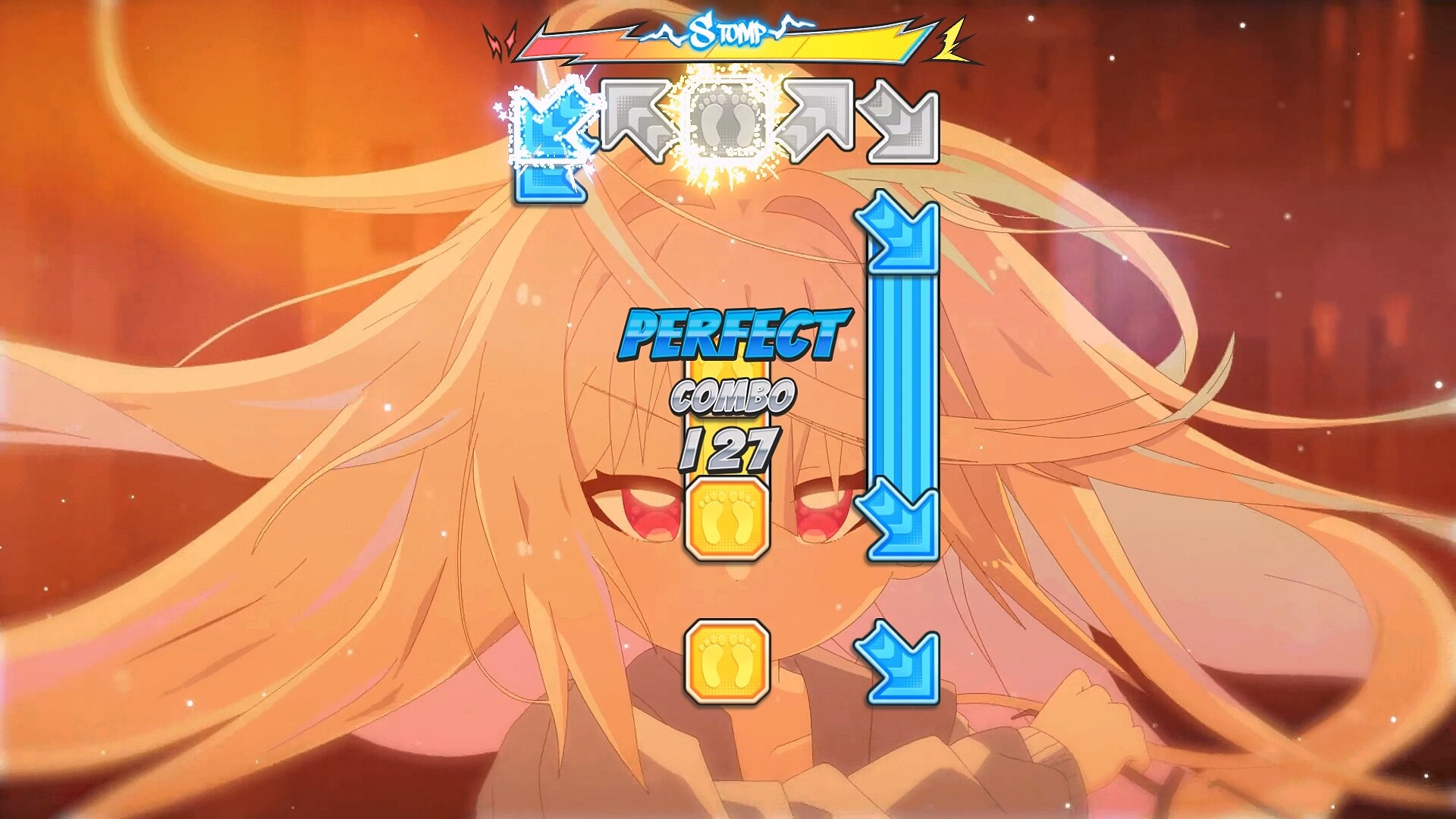
PUMP IT UP RISE · Official PC promotional screenshot
A later Pump It Up RISE PC screen. Four diagonal directions and a central yellow note move toward judgment positions above. The PC version uses keyboards and gamepads; arcade versions use dance panels.
Image credit: ANDAMIRO / Steam · Source page ↗ · Original image ↗
Advance warning and timing windows
Showing a target earlier gives the player more time to move; widening the timing window changes what counts as a hit. Distinguish uncertainty about when to step from insufficient time to reach a panel. Body size and experience also belong in the comparison conditions.
Sources & scope
The official chronology establishes the 1998 starting point. WORLD screenshots and freeze-arrow instructions are later materials explaining current-version controls.