Rhythm-game history / Historical analysis
NecroDancer: deciding when and where to move
Crypt of the NecroDancer asks players to keep the beat while choosing their next tile and combat action. Identical input times can produce different outcomes because direction is also a decision.
Article summary
- Combine beat-timed action with spatial choice.
- Allow choices beyond reproducing a predetermined note sequence.
- Read visual, rhythmic and routing errors separately.
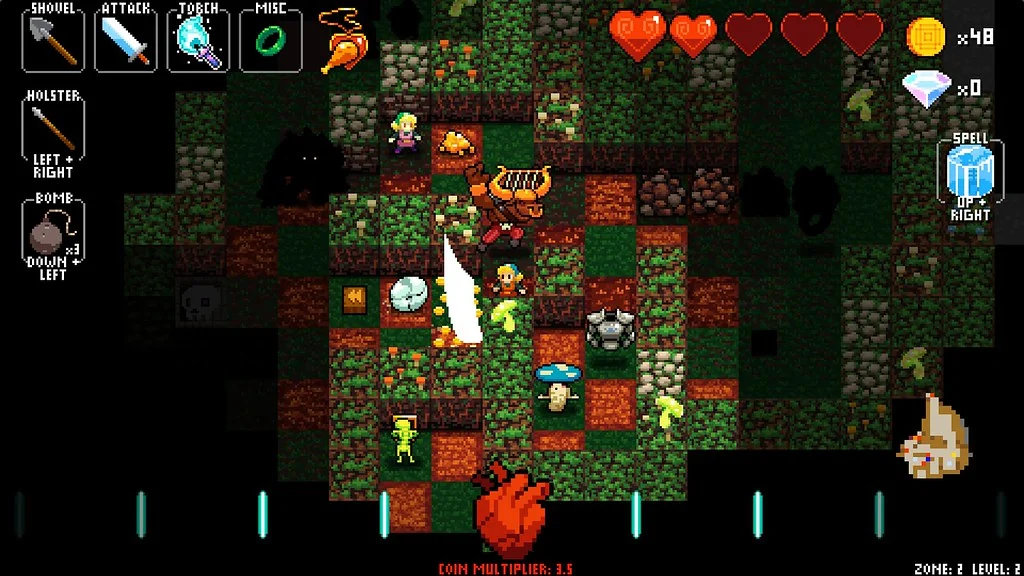
Crypt of the NecroDancer · Developer's 2015 announcement screenshot
A dungeon grid, enemies and a beat indicator at the bottom of the screen appear together. The scene requires spatial decisions about the next tile and timing decisions about the beat on which to move.
Image credit: Brace Yourself Games / PlayStation.Blog · Source page ↗ · Original image ↗
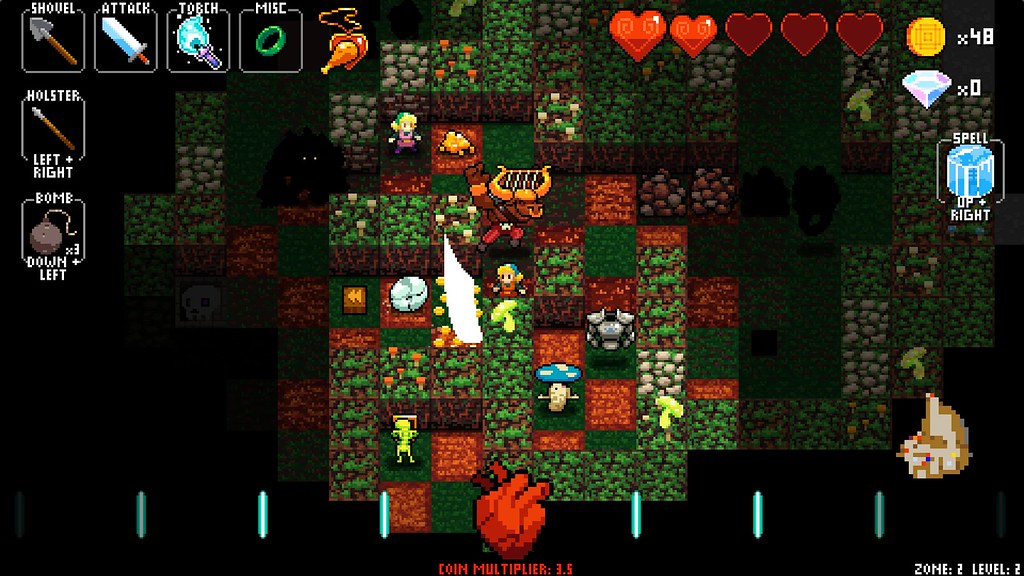
Basic controls
- Check the music and beat indicator below the play area.
- Enter a movement direction to the beat.
- Choose the next tile from enemy and obstacle positions.
Timing and direction within a beat
The beat sets the moments to act; the grid sets the places to move. Characters, enemies, walls and paths occupy that shared space, making a direction input a route choice. Players are choosing an action as well as timing it.
The PC version described in 2015
Brace Yourself Games' 2015 PlayStation article introduces the PC version already available, rhythm-based combat and randomized dungeons. This article concerns that PC version at the time. The announcement date is distinct from actual PS4 and Vita releases.
Controls and features at a glance
| Element | What the player does | Play characteristic |
|---|---|---|
| Rhythm | Act to the beat | The input's timing condition |
| Movement | Choose the next tile and direction | Spatial decision |
| Combat | Consider enemy positions and actions | Combine time and route |
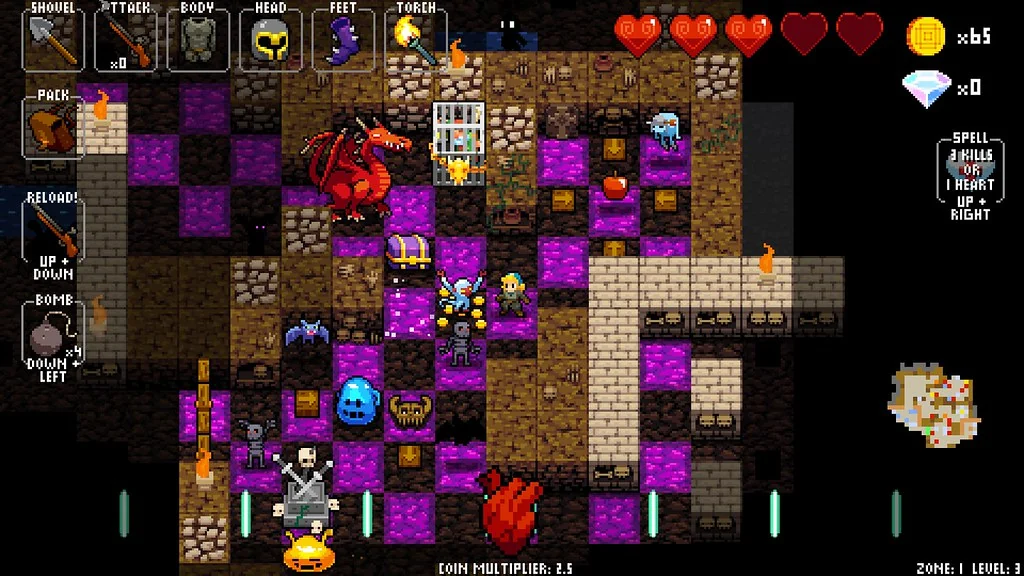
Crypt of the NecroDancer · Developer's PC screenshot
A dungeon placing walls, paths, enemies and the character on one grid. Players choose which tile to enter.
Image credit: Brace Yourself Games · Source page ↗ · Original image ↗
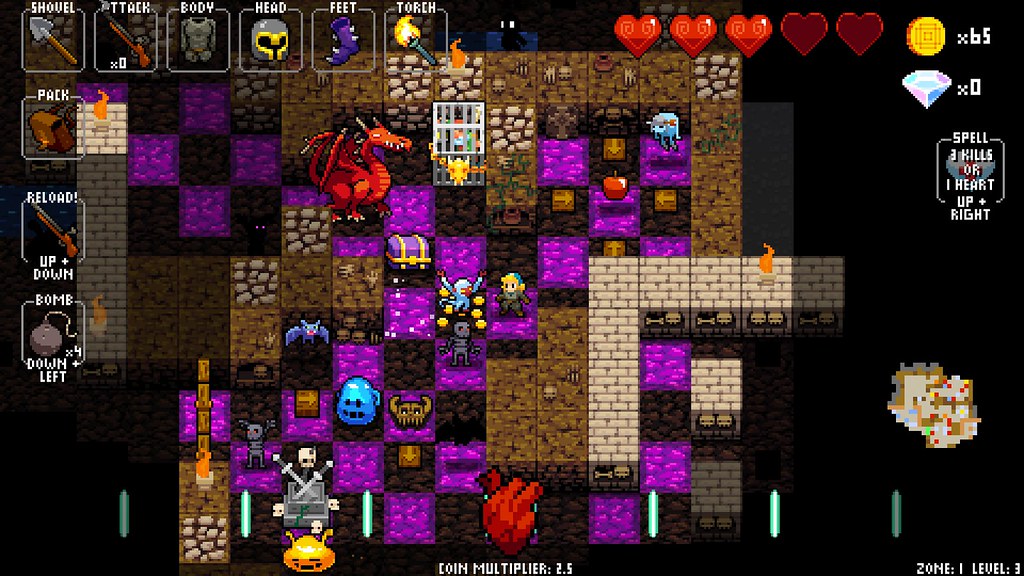
Timing errors and choice errors
Combat depends on both timing and destination. A missed beat calls for checking timing cues. A wrong route calls for checking enemies and spatial information. Following both decisions explains how rhythm and dungeon exploration work together.
An illustrative comparison adding choice
A hypothetical comparison could fix the next move in one version and offer two routes in another, using the same music. Hold advance cues and timing windows constant to examine spatial choice. Define movement rules before adding beat constraints so the connection is explicit.
Beat Saber · Official PC promotional screenshot
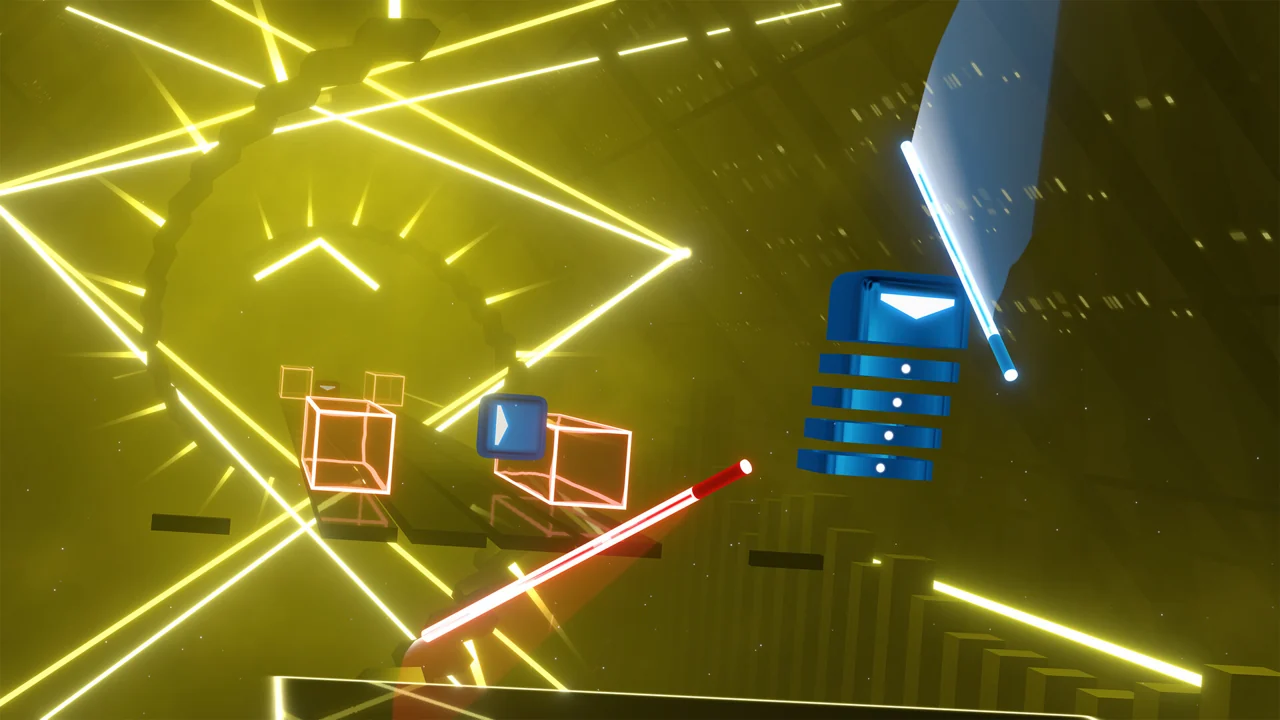
An official Beat Saber PC gameplay screenshot. Players read approaching blocks' colors and arrows, then swing the corresponding hand's saber in the specified direction.
Image credit: Beat Games / Steam · Source page ↗ · Original image ↗
Waiting to act
Choosing a move and waiting for the beat brings the two decisions together. Observe whether that wait creates the intended tension or comes from unclear information. Beat Saber's indicated cutting directions offer a comparison with choosing a route.
Sources & scope
The developer's article informs this analysis of rhythm input and dungeon choice in the 2015 PC version.