Music guide
Building a beat with kick, snare and hi-hat
Compare drum placement and input targets at 120 BPM, hear half-time and tempo changes separately, and distinguish a mixed WAV, individual stems and scheduled event times.
Game design, rhythm and audio technology
Compare drum placement and input targets at 120 BPM, hear half-time and tempo changes separately, and distinguish a mixed WAV, individual stems and scheduled event times.
How to preserve action cues beyond color, assess essential-signal contrast and check actual touch areas, using WCAG 2.2 within its applicable scope.
An MDA analysis of a timing-game example, connecting rules, interactions and experience while keeping observed behavior separate from participants' impressions.
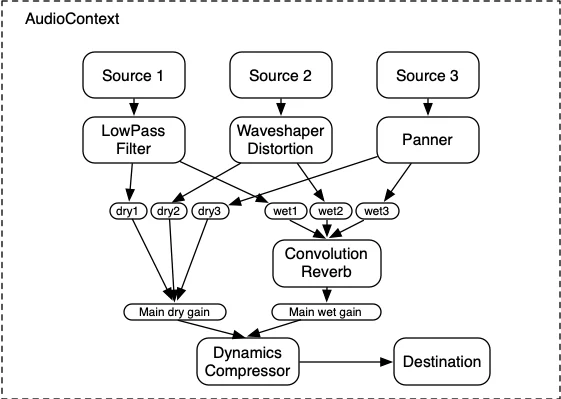
An explanation of two-clock audio scheduling based on Chris Wilson's technical guide. Includes a four-beat example at 120 BPM and the trade-offs of different scheduling horizons.
How to investigate a silent web game by checking user actions, AudioContext state and file loading, including first playback and returning after an app switch.
How to build a small game, drawing on the Experimental Gameplay Project, Arkadium's prototype process and Godot's official tutorial. Covers design questions, technical risks, state transitions, restarting, production scope and completion criteria.
How rhythm games connect audio tracks, charts, target times, inputs, hit detection and feedback, with a step-by-step approach to investigating visual and audio sync problems.